The Book of Mormon
The Church of Jesus Christ of Latter-day SaintsBooks & Reference
4.61.62K Reviews
- Version
- 4.13.0 (48819.3205195)
- Installs
- 1.00M
- Age Rating
- Everyone
Screenshots
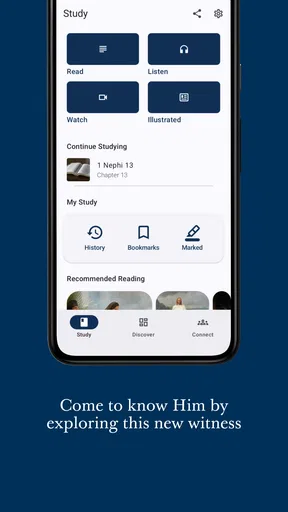
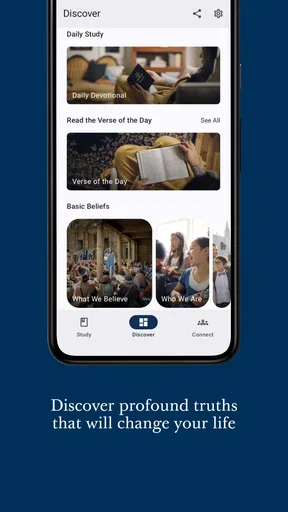
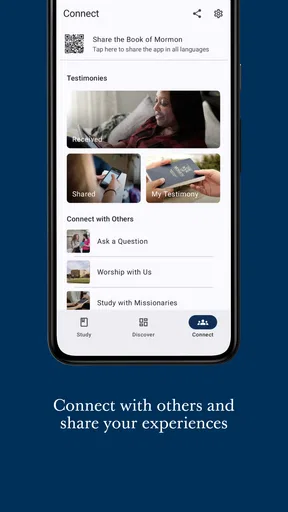
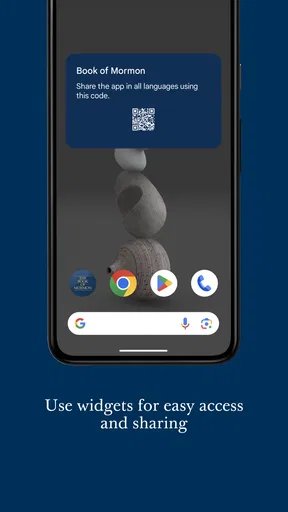
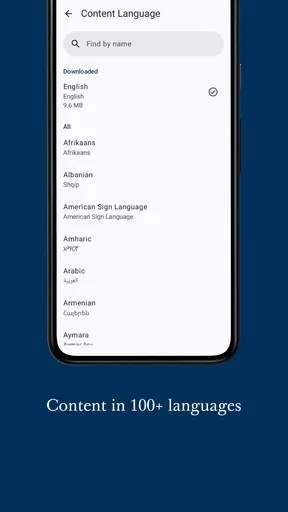
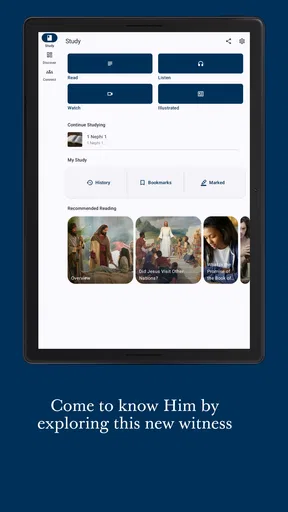
Our Review of The Book of Mormon
 Analysis by Appyee
I approached The Book of Mormon as a reading and reference app rather than as a simple digital book. That distinction matters because its value depends less on flashy presentation and more on how easily I can return to scripture, search for a passage, and fit reading into ordinary moments. It is a free Books & Reference app from The Church of Jesus Christ of Latter-day Saints, with an Everyone age rating, so it is clearly designed for a broad audience rather than a specialist study group.
My overall impression is positive, especially for readers who already want the Book of Mormon close at hand. The app has the focused purpose I would expect from an official scripture reader: it puts the text first and avoids turning the experience into a crowded general-purpose reading platform. At the same time, that focus means it will not satisfy someone looking for a large library, literary commentary, or the discovery tools found in a mainstream ebook service.
How the reading experience fits real mobile use
The most convincing reason to use this app is convenience. A physical copy is still excellent for long, deliberate study, but a phone is usually already with me when I have a few spare minutes. I can read during a quiet break, continue a chapter while travelling, or check a remembered passage without carrying another book. That makes the app particularly useful for maintaining a regular reading habit rather than waiting for a perfect, uninterrupted session.
I also like the way a dedicated scripture app changes my mindset. Opening it takes me directly to the text instead of placing it beside social feeds, shopping recommendations, or unrelated books. That narrow purpose can be a benefit when I want a short, intentional reading session. It is less appealing if I prefer to keep all my reading inside one ebook application with a unified bookshelf and shared reading controls.
A realistic everyday use would be a reader who has ten minutes before an appointment. Rather than guessing which chapter to open, they can resume their place, read a small section, and close the app without needing a full study setup. Later, they might search for a word or passage that came to mind during the day. This kind of stop-and-start reading is where the app feels more practical than a paper volume.
Navigation is more important than decoration
For scripture, navigation is part of the reading experience. I found that the ability to move through books and chapters matters just as much as comfortable text display. A reader may begin with a continuous reading plan, but actual use often involves jumping to a familiar account, checking a verse mentioned in conversation, or moving between passages for personal study.
That is also where expectations should stay realistic. This is not a full academic research environment. Someone who needs extensive cross-referencing across a large theological library, advanced annotation management, or scholarly commentary may be better served by a specialist study tool or a physical collection of reference books. The app works best when the primary task is reading the Book of Mormon itself, with quick movement through its contents.
One useful habit is to decide before opening the app whether I am reading continuously or looking something up. For continuous reading, I avoid unnecessary jumps and treat the phone as a compact book. For reference work, I go straight to the relevant location instead of scrolling aimlessly. That small distinction reduces the distraction that can come from reading on a multipurpose device.
What connectivity changes during a session
Connectivity shapes the experience most noticeably when I am starting a session, moving between locations, or trying to retrieve content while the phone has an unreliable signal. A connected phone can make a digital reading tool feel immediate, but a weak network can turn a simple action into a wait. That is not a problem unique to this title; it is a general trade-off of reading on a device whose services may depend on communication with the internet.
I would therefore avoid assuming that every situation will feel identical. At home or on a reliable connection, opening and navigating the app is more comfortable. In a basement, on public transport, or in a crowded venue, the experience may be less predictable. If I know I will be somewhere with poor reception, I prepare my reading session beforehand rather than relying on last-minute access.
This is one of the app’s important practical limitations: the store summary tells me what the book is, but it does not turn a phone into a universally dependable replacement for a printed copy. Readers who regularly study in places where connectivity is uncertain should treat network conditions as part of their decision. A paper edition remains the safer choice when immediate access must not depend on a device or connection.
Handling interruptions and recovering your place
Mobile reading is full of interruptions. A call, message, low battery warning, or quick switch to another app can break concentration. My advice is to make a habit of noting the chapter and verse before leaving a longer session, especially when the reading is being done in short bursts. That simple routine makes recovery easier if the app does not return exactly where I expected.
I would also reopen the app before an important reading moment rather than waiting until the last second. If the phone has been offline, restarted, or heavily used by other apps, checking access early gives me time to adjust. This is a small but meaningful difference between casual reading and dependable preparation for a lesson, discussion, or personal study period.
When a session fails, I prefer a calm recovery process: check the connection, close and reopen the app if necessary, and return through the book and chapter rather than repeatedly tapping the same stalled action. I cannot promise that every interruption will resolve instantly, but the text’s straightforward purpose makes it easier to recover than a complex multimedia application with several layers of content.
Using it without wasting mobile data
For a text-centered app, I would not expect ordinary reading to be as demanding as streaming audio or video, but data-conscious readers should still use sensible habits. I read over a trusted connection when possible, avoid repeatedly restarting the app just to test whether content will load, and keep longer study sessions for places where my phone behaves reliably. These are practical precautions rather than claims about a particular data policy.
Battery awareness matters too. A short reading session is different from leaving the screen active for a long study period. Lowering screen brightness, using the phone’s normal battery settings, and closing unrelated apps can make the device more comfortable for extended reading. The app itself cannot solve every limitation of a small screen or aging battery, so the surrounding phone setup still affects the result.
Readers with limited data may also prefer to establish a routine around predictable connections. For example, I might read a chapter at home, then use the app later for a brief reference check while away. That approach keeps the mobile experience convenient without treating every reading session as something that must happen on a cellular connection.
Who will appreciate this focused approach
The strongest audience is someone who already wants the Book of Mormon available in digital form and values a direct, uncluttered reading experience. It is also a good fit for people who move between home, work, study, and travel, because a phone is easier to keep nearby than a separate book. Families and individual readers can both find value in that convenience, particularly when reading happens in short, irregular sessions.
The app is less suitable for a reader who wants a broad ebook catalog, sophisticated literary analysis, or a single platform for many unrelated books. A general ebook reader may offer better shelf management across different titles. A printed copy may be better for extended reading, group annotation, or settings where phones are distracting or connectivity is uncertain. Choosing this app is therefore less about replacing every other format and more about adding a convenient digital option.
I would also think about reading preferences. If I enjoy marking pages with physical notes, comparing several paper volumes at once, or keeping my phone away during devotional time, the app may feel secondary. If I value search, portability, and quick access above tactile interaction, it becomes much more compelling.
How established the app feels
The app has been available since August 20, 2012, and its current version is 4.13.0 (48819.3205195). It requires Android 8.0 or later, so anyone using an older phone should check compatibility before planning around it. Its scale is also reassuring: it has passed one million installs, with an average rating of 4.6 from around twelve thousand ratings and around 1.6 thousand written reviews. Those figures suggest that it is not an obscure experiment, although popularity alone cannot guarantee that it will match every reader’s preferences.
Its free price removes the most obvious barrier to trying it. I can test the reading flow without committing money, then decide whether it complements a paper copy or replaces another digital method. The Everyone rating also makes it approachable for households that want a straightforward scripture reader without an age-restricted presentation.
The developer identity matters here as well. The Church of Jesus Christ of Latter-day Saints gives the app a clear connection to the work it presents, which may be important to readers who want an official source rather than an independently assembled text. That will not automatically make it the right choice for every tradition or study goal, but it does make the app’s purpose easy to understand.
Small habits that make it more dependable
I get more from the app when I treat it as part of a reading routine instead of a solution for every kind of study. I choose a passage before opening the phone, keep a note of where I stopped during interrupted sessions, and use a reliable connection when I expect to read for a long time. These habits reduce friction without requiring complicated setup.
Another useful approach is to pair digital convenience with a separate reflection method. After reading on the phone, I can write a thought in a notebook or use a familiar note-taking tool, rather than trying to turn the scripture app into a complete journaling system. This keeps the reading focused and avoids expecting one small application to manage reading, research, and personal records equally well.
For group settings, I would share the exact book, chapter, and verse before the discussion begins. That is more reliable than assuming everyone will find a passage at the same speed, especially if some participants have weak connections or different devices. The app can support quick access, but a group still benefits from simple coordination.
My connectivity verdict
Connectivity does not define the app, but it influences how confidently I can use it away from home. On a dependable connection, the focused design and free access make it an easy recommendation for readers who want the Book of Mormon on a phone. In uncertain network conditions, I would prepare ahead, keep a paper copy as a backup when the situation matters, and avoid treating mobile access as automatically universal.
My final view is that this is a practical, purpose-built scripture reader rather than a replacement for every reading format. It succeeds by keeping attention on one important text, making short reading sessions convenient, and offering a low-risk way to carry that text digitally. Its limitations are equally clear: it is not a broad ebook service, not a scholarly reference suite, and not necessarily the best option when a connection or phone is unreliable.
If those boundaries fit your needs, I think it is worth installing. The best reason to choose it is dependable access to focused reading, not a long list of extra features. I would recommend it to anyone who wants a free, official mobile companion for regular scripture reading, while suggesting a paper edition or a more expansive study tool for readers whose priorities extend beyond the central text.
Verdict
Strengths of The Book of Mormon
- Free access to the complete Book of Mormon text
- Audio playback makes listening convenient while commuting
- Simple navigation between books, chapters, and verses
- Search tool helps locate names, topics, and passages quickly
- Available offline after downloading the required content
Limitations of The Book of Mormon
- Language options and audio availability vary by edition
- Some features may require an internet connection initially
- Older devices may experience slower loading or navigation
- The app focuses narrowly on scripture rather than study resources
- Reading style and terminology may feel challenging for newcomers
Other Releases by The Church of Jesus Christ of Latter-day Saints
View All
Gospel Library
Books & Reference4.7

Member Tools
Books & Reference4.3
Similar Picks in This Category
View All
Google Play Books & Audiobooks
Google LLC4.7

네이버 - NAVER
NAVER Corp.3.5

Wattpad - Read & Write Stories
Wattpad.com3.7

King James Bible - Verse+Audio
Ozion4.8

Bible Offline-KJV Holy Bible
Bíblia Offline4.9

Amazon Kindle: Reading App
Amazon Mobile LLC4.8
Frequently Asked Questions
What is The Book of Mormon app?
The Book of Mormon app is a digital reading resource that gives users access to the Book of Mormon along with helpful study features, depending on the version available on Android or iOS. It is designed for convenient reading, searching, bookmarking, and personal study. Before downloading, check the app listing to confirm the included editions, supported languages, and available tools.
Is The Book of Mormon app free to download and use?
In most cases, official Book of Mormon reading apps are free to download and use, with the main text available without a purchase. However, features, translations, audio content, or additional study resources may vary by app. It is worth reviewing the store page carefully, especially if you want offline access or are concerned about advertisements, optional purchases, or account requirements.
Can I read The Book of Mormon offline?
Offline reading depends on the specific application and how its content is delivered. Many dedicated scripture apps allow users to download text or audio for use without an internet connection, which is useful while traveling or in areas with limited coverage. After installation, check the download settings and test the app in airplane mode before relying on it offline.
Does the app include audio, search, and study tools?
The available features depend on the developer and app edition, but many Book of Mormon apps include keyword search, bookmarks, notes, highlighting, reading history, and adjustable text settings. Some also provide narrated audio, chapter navigation, cross-references, or links to related scriptures. Users should verify the current feature list because tools can differ considerably between Android and iOS versions.
Is The Book of Mormon app suitable for beginners and study groups?
Yes, a digital edition can be useful for first-time readers, regular personal study, and group discussions because chapters are easy to navigate and passages can usually be found quickly. Beginners may appreciate adjustable text and search features, while experienced readers can benefit from bookmarks and notes. Those using it for formal study should confirm the edition and translation match their group or church materials.
